Photo Keychains That Play Video: Tiny Prints, Big Upsell
Stories AR team
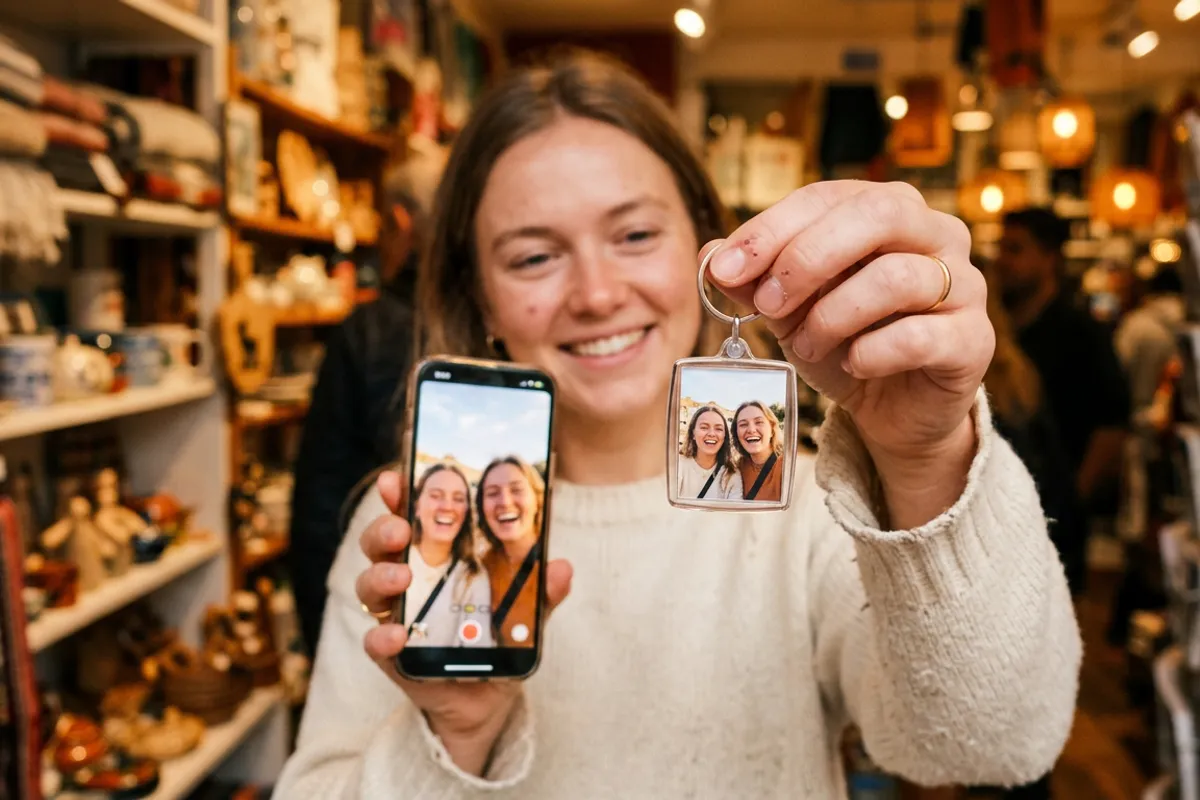
A keychain with a child's photo is a nice gift. A keychain where that photo starts moving — the kid laughing, a pet running to the camera — is the gift people show to everyone at the table. AR works on surprisingly small prints: anything from business-card size up recognizes reliably. Here is how AR keychains and souvenirs work, what small triggers demand from the image, and how souvenir shops and photographers turn them into a product.
Quick answer
An AR keychain is a small printed photo linked to a video in Stories AR. The buyer scans a QR code, the browser camera opens, and the tiny print plays its video — no app needed. Living photos work from business-card size up; the key is a detailed, matte trigger image. First AR photos are free, so you can test your smallest format before selling it.
Key takeaways
- AR recognition works from business-card size, which covers keychains, magnets and most small souvenirs.
- Small triggers need detail: faces and textures work, flat colors, repeating patterns and glossy finishes fail.
- The viewer needs no app — the video plays in Safari or Chrome after scanning a QR code.
- The video behind a keychain can be replaced anytime without remaking the physical item.
- The first AR photos are free, so a shop can prototype its smallest product at zero cost.
Why small formats are the sweet spot for AR
Big prints impress on a wall, but small items travel. A keychain lives in a pocket, a magnet on a fridge, a mini-print in a wallet. Each one is a portable demo: every time the owner shows it, the effect sells itself to a new audience.
Stories AR recognition works on prints from business-card size all the way to posters — and even from screens. That lower bound is exactly what makes keychains viable: a 5×5 cm photo insert is enough for the camera to lock onto, as long as the image itself carries enough detail.
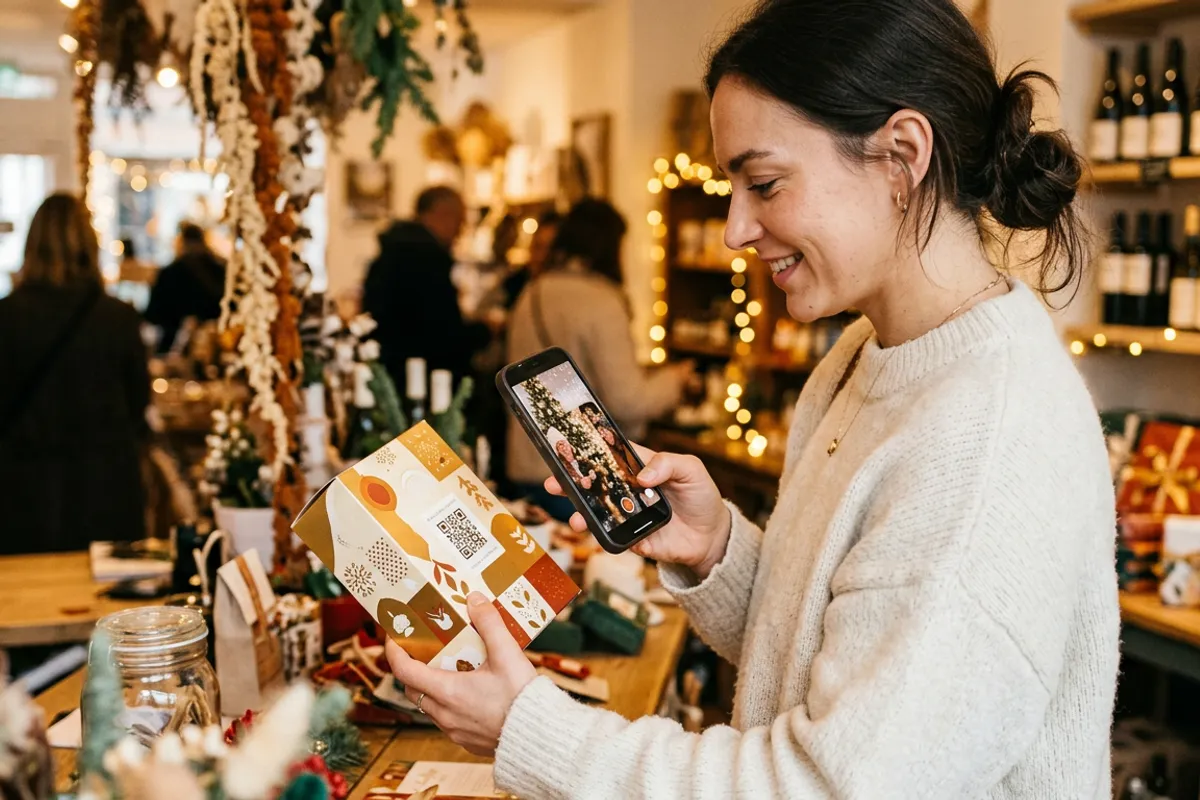
The mechanics are the same as with any live photo print: you pair the printed photo with a video, the platform generates a link and a QR code, and the browser does the rest. No app for the viewer, on iPhone or Android.
The gift angle: a keychain that plays your kid
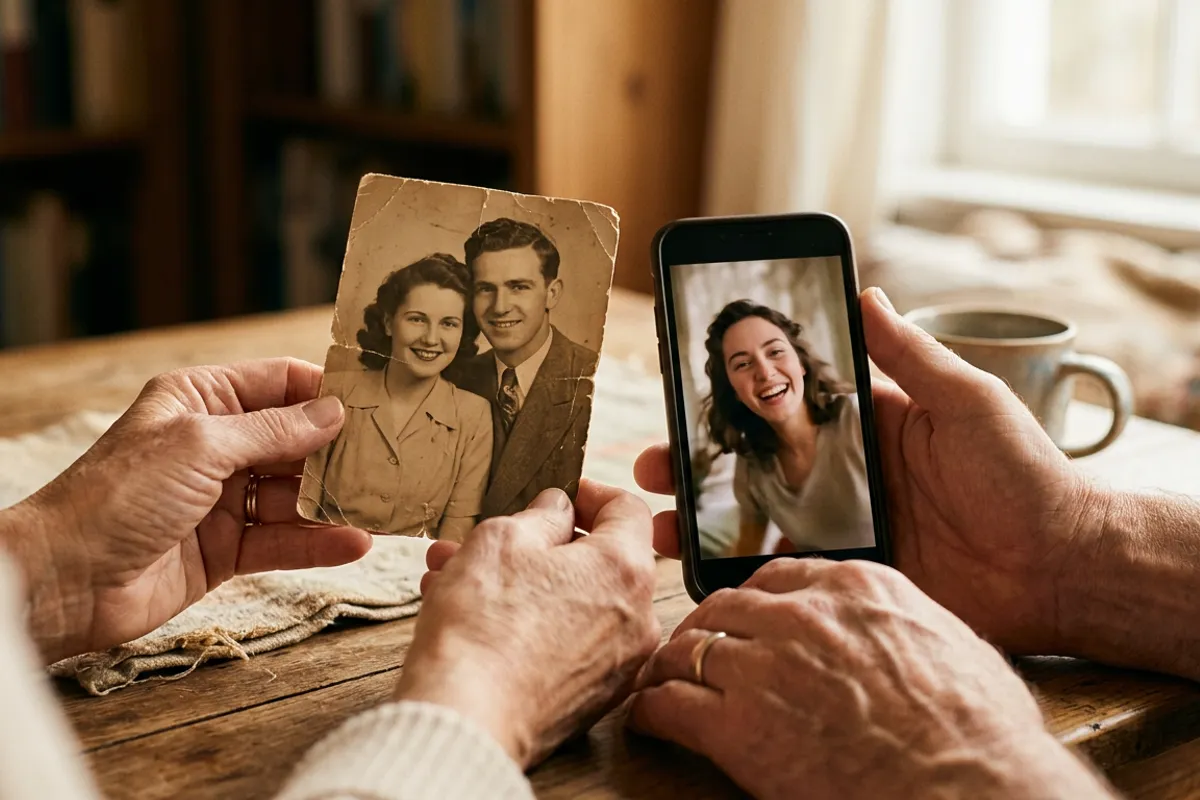
The strongest use case is personal. A parent prints a photo of their child on a keychain and links it to a 15-second video from the same moment — the birthday candles, the first bike ride. Grandparents get a physical object they can carry and a living moment they can replay.
Pets work just as well: the photo of a dog mid-run, linked to the video it was pulled from, makes the print appear to wake up. The trick that sells the effect is matching the first frame of the video to the printed photo.
Because the QR code and link never change, the video can be updated later — the same keychain can play this year's birthday next year, without touching the physical item.
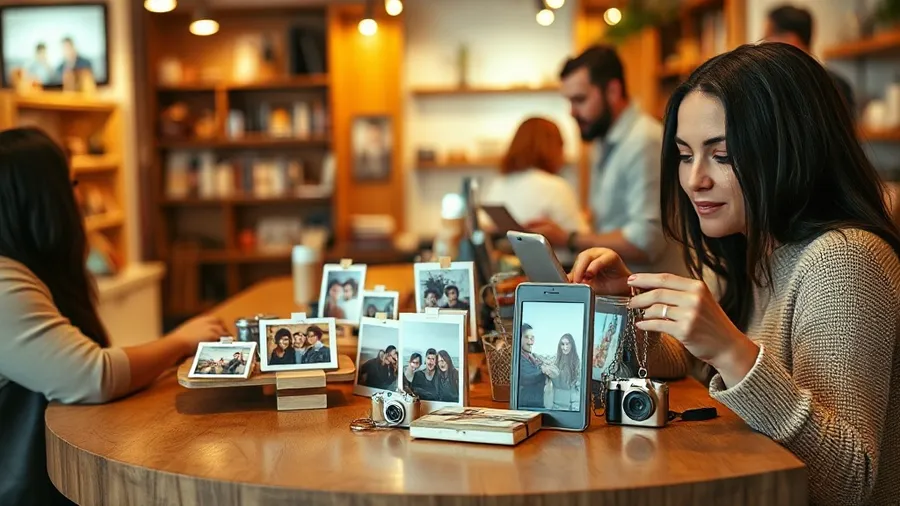
The business angle: souvenir shops and photographers
For a souvenir shop, AR turns a commodity into a premium line. Keychains, magnets and mini-canvases already sit on the counter; adding a video layer justifies a higher price for what is essentially the same production cost plus a QR code.
For photographers, small AR items are a natural upsell after a shoot. A family session already produced both photos and video clips; pairing them into keychains and magnets monetizes material that would otherwise stay in an archive folder. More than 62 000 photographers already use Stories AR, and over 259 000 AR photos have been created on the platform.
Volume pricing is straightforward: the free tier covers your first AR photos for prototyping, and the PRO plan at $24/month billed yearly includes 20 AR photos per month for regular production.
Trigger quality: what tiny prints demand
Small formats are less forgiving than posters, because the camera sees fewer pixels of your image. The rules from the AR trigger image guide matter double here:
- Choose detailed images — faces, fur, foliage, textured backgrounds. Detail is what the recognition locks onto.
- Avoid flat single-color areas and minimalist compositions; a white background with a small logo will not track on a keychain.
- Skip repeating patterns — they confuse recognition at any size, and especially on small prints.
- Prefer matte lamination. Heavy gloss creates reflections that break tracking on curved or hand-held items.
- Test the actual printed item before a production run: print one keychain, scan it in daylight and indoor light.
How to make one in practice
The workflow takes minutes. Sign up at pro.stories-ar.com, upload the photo and the video, and get a link plus QR code. Print the photo at your keychain or magnet size; place the QR code on the packaging, the backing card or the reverse side of the item.
For a shop, the repeatable process is: customer sends photo + video, staff uploads the pair, the item is printed and packed with its QR code. One order, one AR photo, a few minutes of work on top of normal production.
Start with the free tier: make one keychain-sized test, hand it to three people, and watch whether they scan it twice. That reaction is your market research.
Prototype your first AR keychain free
Upload a photo and a video, print at keychain size, scan — the whole test costs nothing on the free tier.
Start for freeFrequently asked questions
How small can an AR print be?+
Recognition works from business-card size up. Keychain and magnet photo inserts in that range track reliably if the image is detailed and not glossy.
Does the buyer need to install an app?+
No. Scanning the QR code opens the camera in Safari or Chrome, and the video plays right in the browser on both iPhone and Android.
Can the video be changed after the keychain is made?+
Yes. The QR code and link stay the same forever; replace the video in the dashboard and the same physical item plays the new clip.
What does it cost to sell AR souvenirs?+
The first AR photos are free. For regular volume, the PRO plan is $24/month billed yearly and includes 20 AR photos per month.