Video Business Card Ideas for 7 Professions
Stories AR team
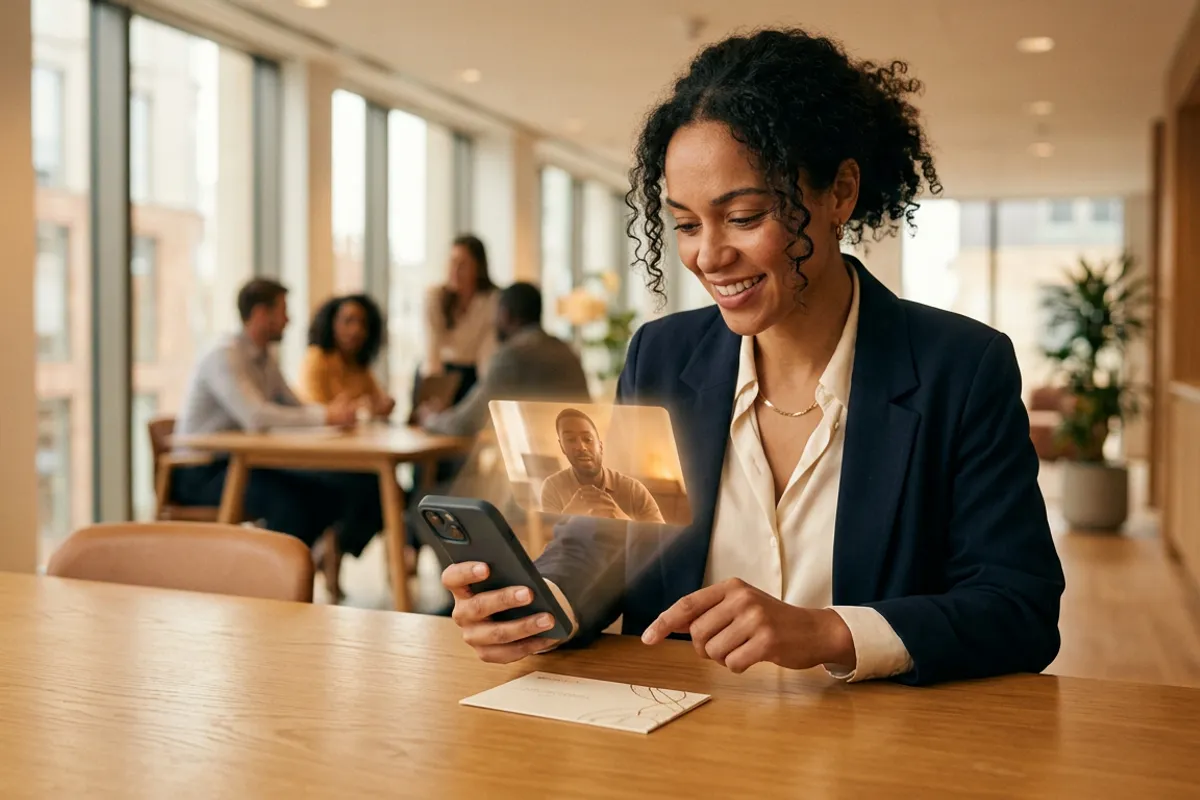
An AR business card is a regular printed card with one hidden layer: point a phone camera at it and a video plays right on top of the print, in the browser, no app. The technology is the easy part — the hard question is what to show in those 20–30 seconds. Below are concrete video ideas for seven professions, plus what to print on the card so the effect lands.
Quick answer
The best AR business card video is not a logo animation — it is you doing your work: a photographer's best frames, a realtor's walkthrough, a musician's live 30 seconds. Print your portrait or signature work on the card as the trigger, add a short video with a call-to-action button, and the card becomes a portfolio that fits in a wallet.
Key takeaways
- Rule one: show the work, not the logo — a face or a signature shot makes both a better trigger and a better video.
- Keep the video at 20–30 seconds; the viewer is standing, holding a phone over your card.
- Make the first frame of the video match the printed image — the card appears to wake up.
- Add a call-to-action button on top of the video: booking link, portfolio, listing page.
- You can swap the video anytime without reprinting cards — the QR code never changes.
How the card works in 10 seconds
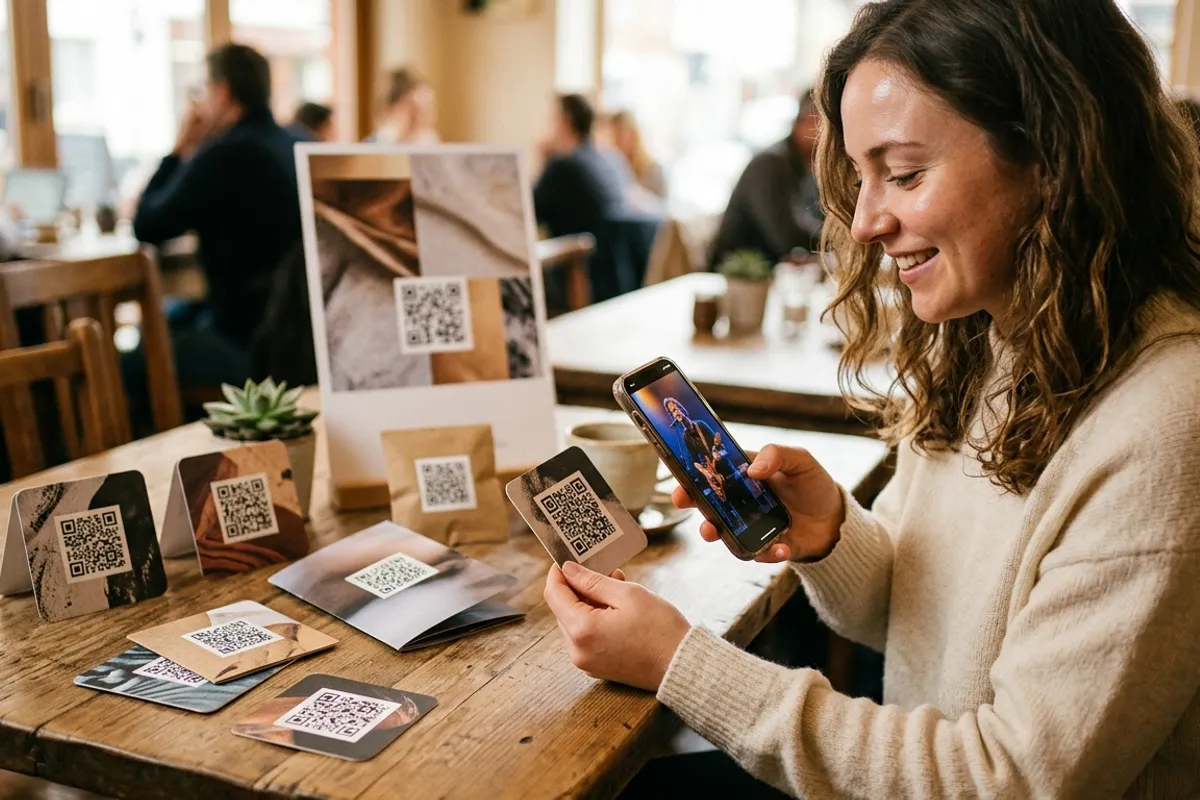
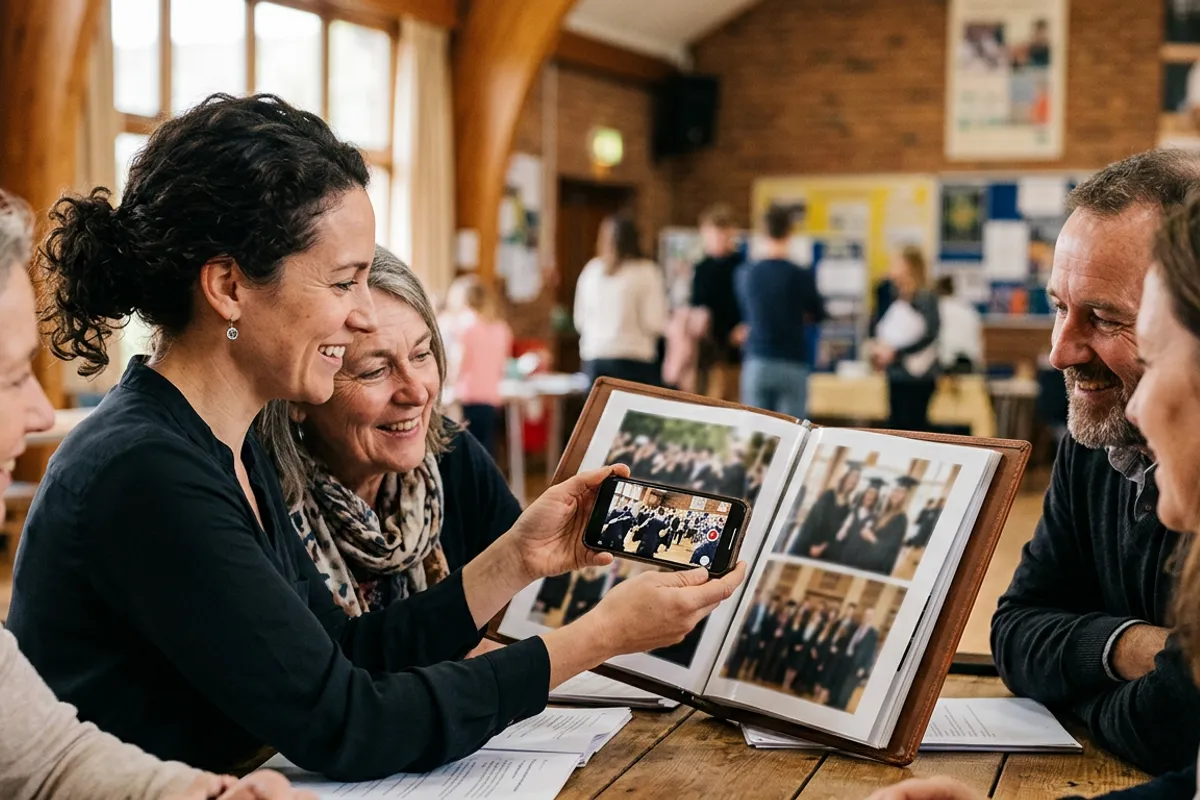
You print a card with a detailed image on it — your portrait or your best work. In the Stories AR dashboard you pair that image with a video and get a QR code to add to the card. The person you hand it to scans the QR, their browser opens the camera, they point it at the card — and the printed image starts playing your video, anchored to the card in their hand.
The mechanics, print specs and setup are covered on the AR business card page. Here we focus on the creative question: what should the video actually be, profession by profession.
Photographer, realtor, makeup artist
Photographer. Print your single strongest portrait on the card. Behind it: a fast cut of 6–8 best frames from different shoots — wedding, family, portrait — ending on your face and a "Book a shoot" button. The card itself demonstrates the product: if you sell living photos as an add-on, the card is your live demo.
Realtor. Print your professional headshot. Behind it: a 20-second walkthrough of your best current listing or a montage of sold properties, closing with your phone number held on screen. Swap the video whenever the flagship listing changes — the printed cards in a hundred pockets all update instantly.
Makeup artist. Print the after-shot of your best transformation. Behind it: the before-to-after process in timelapse. Nothing sells makeup like watching the change happen, and the printed "after" waking up into the "before" is a genuine wow moment.

Musician, coach, florist, videographer
Musician or band. Print the album art or a stage shot. Behind it: 30 seconds of your strongest live moment with real sound — the card literally plays your music. Add a button to your streaming profile or ticket page.
Coach or trainer. Print your portrait mid-session. Behind it: a direct-to-camera 20-second pitch — who you help, with what, and one client-facing promise you can keep. Speaking straight into the lens from a card someone holds is unusually personal; use it.
Florist. Print your signature bouquet. Behind it: a timelapse of that exact bouquet being assembled, stem by stem. It shows craft, not just product, and the first-frame match is naturally perfect.
Videographer. The most obvious fit of all: print a still from your showreel and let the card play the reel itself. Your business card becomes your demo tape — hand it out at every wedding fair and venue meeting.
What to print so the card scans well
The printed image is the trigger, so it must carry detail. Faces, textured bouquets, stage scenes and interiors all work well. Avoid flat single-color backgrounds, repeating patterns and heavy glossy laminate — glare and uniformity hide the detail the camera needs. Matte finish is the safe default.
Business-card size is within the working range — recognition works from card size up to posters — but do not shrink the trigger image to a thumbnail in the corner. Let the photo own most of the card face and place the QR code and contacts on the back.
- Trigger image fills most of the front; QR code and contacts on the back
- Matte or soft-touch laminate, not gloss
- First frame of the video = the printed image
- One call-to-action button: book, listen, view listing
One card, updated forever
The strongest practical feature: the QR code and link never change. Order 500 cards once; change the video behind them every season — new portfolio, new listing, new track. A QR code that opens a video from print is useful on its own, but pairing it with image recognition is what turns a card into a pocket portfolio.
Making one takes about two minutes on the free tier: upload the card image and the video at pro.stories-ar.com, download the QR, send the layout to print. More than 62 000 photographers already use the platform, and the same flow works for any of the seven professions above.
Make your card play video
Upload your card image and a 30-second video — get a working AR business card with a QR code in about two minutes. First AR photos are free.
Start for freeFrequently asked questions
Does the person receiving the card need an app?+
No. They scan the QR code, the browser opens the camera, and the video plays over the card — Safari on iOS and Chrome on Android both work.
How long should the video be?+
20–30 seconds is the sweet spot: the viewer is standing with a phone in hand. Lead with your strongest material in the first 5 seconds.
Can I update the video after printing 500 cards?+
Yes — replace the video in the dashboard and every printed card plays the new one instantly. The QR code never changes.
What image works best as the trigger?+
A detailed photo: your portrait or signature work. Avoid flat colors, repeating patterns and glossy laminate, which make recognition harder.