Pet Portraits That Play Video: The Upsell You're Missing
Stories AR team
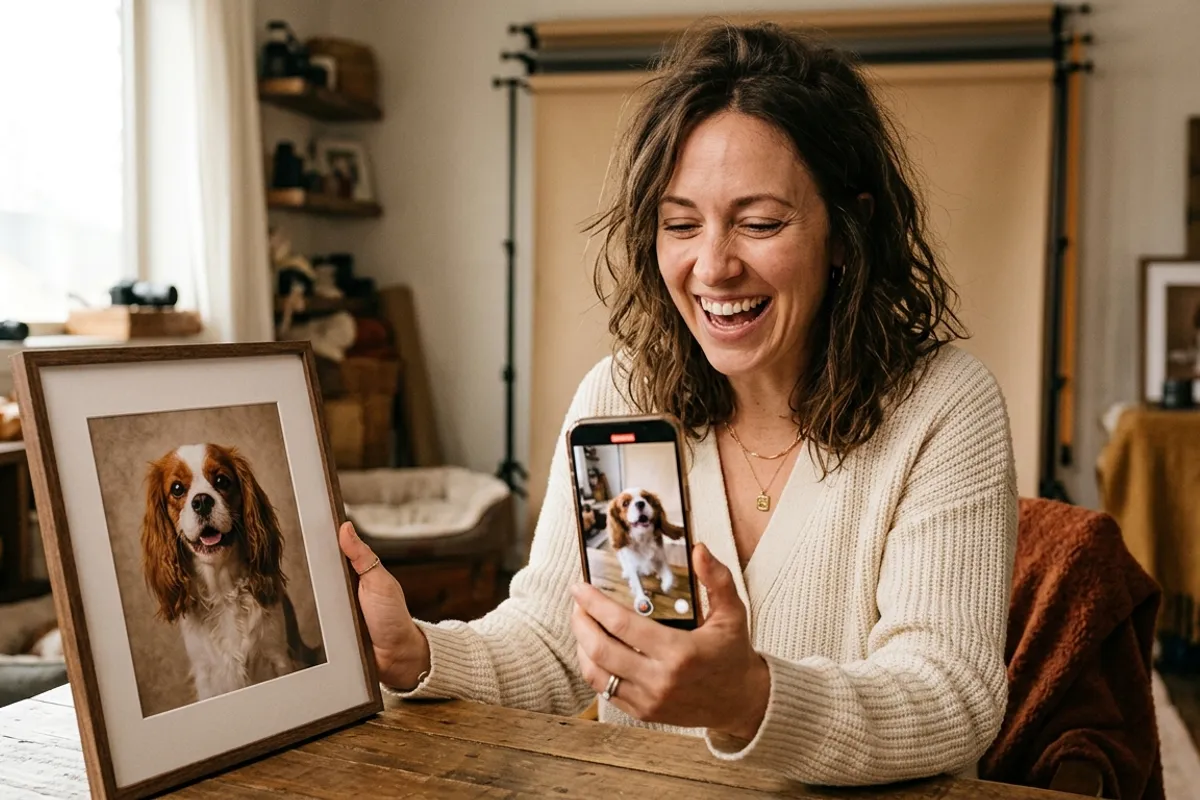
A printed portrait of a dog is a nice product. A printed portrait that starts playing a video of that same dog running, barking and wagging its tail the moment the owner points a phone at it — that is a product people show to everyone they know. Pet photographers are in a uniquely good position to sell living photos, and most of them have never offered one. Here is why the upsell works and how to build packages around it.
Quick answer
An AR pet portrait is a regular print paired with a short video in Stories AR: the owner scans a QR code, points the camera at the print, and the pet comes alive in the browser — no app needed. Photographers shoot 15–30 seconds of extra video during the session and sell the AR version as a premium add-on to any print product.
Key takeaways
- Pet owners are emotional buyers: they routinely spend more on their pets' portraits than on their own, and motion multiplies the emotional pull.
- The extra production cost is minutes, not hours — you already capture video-worthy moments during every pet session.
- Pets age fast and are outlived by their owners, so a portrait that preserves movement and voice has long-term value a static print can't match.
- One AR photo takes about two minutes to set up; the video can be replaced later without reprinting the portrait.
Why pet owners buy with their hearts
Ask any pet photographer: clients who haggle over their own family portraits will happily pay for a canvas of their spaniel. The pet is family, the pet doesn't complain about how it looks, and the purchase feels like an act of love rather than vanity.
Motion pushes that emotion further. A static print shows what the dog looked like; a living photo shows how it moved, how it barked at the doorbell, how the cat purred on the windowsill. That difference is exactly what owners are afraid of forgetting — and it's what they will pay a premium for.
There is also a quieter reason this product matters. Pets live shorter lives than we do. A portrait that preserves a pet's actual movement and sound becomes, years later, the most valuable object from the whole shoot. You don't need to say this in your marketing loudly — owners understand it instantly when they see the demo.
How the AR pet portrait works
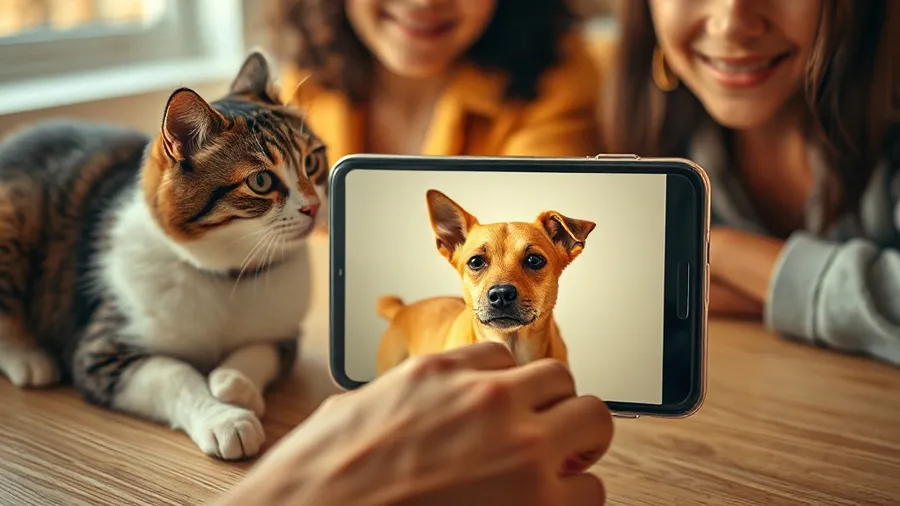
The mechanics are simple. You upload two files to Stories AR: the photo you will print and a short video clip. The platform gives you a link and a QR code. The owner scans the code, the browser opens the camera, they point it at the print — and the video plays anchored right on top of the portrait. It works in Safari on iPhone and Chrome on Android, with nothing to install.
The best effect comes when the first frame of the video matches the printed photo: the dog appears to wake up inside the frame. During the session, shoot 15–30 seconds of video from the same angle as your hero shots — the pet shaking off water, catching a treat, tilting its head. Export the first frame as your print file, or pick the marker frame in the built-in editor.
Pet portraits are strong trigger images by nature: fur texture, eyes and natural detail give the recognition engine plenty to lock onto. Avoid only very dark, low-contrast shots and heavy gloss lamination on the print.
Package ideas that sell
Don't sell "AR" as a technology — sell products. Three packages that map to how pet owners already buy:
- Living portrait upgrade. Any print in your price list can be upgraded to a living version for a flat fee. Lowest friction: the client already chose the photo, you just attach the video.
- Memory set. One framed living portrait plus 3–5 living photos in a small album: the zoomies, the head tilt, the favorite toy. Priced as a standalone premium product.
- Multi-pet household bundle. One living portrait per pet. Households with two or three animals are common, and the per-portrait price feels fair when each pet gets its own moving frame.
- Seasonal cards and magnets. A holiday card or fridge magnet with the pet that plays a video greeting — cheap to produce, easy to sell in quantity.
Pricing the upsell without scaring anyone
Your cost side is almost flat. On the PRO plan at $24/month billed yearly you get 20 AR photos per month — enough for a full month of pet sessions if you sell one or two living products per client. The first AR photos are free, so you can build your demo portfolio before paying anything.
That means the upgrade price is nearly pure margin. Photographers typically position the living version at a noticeable premium over the plain print — enough to signal it's special, low enough that an emotional buyer doesn't pause. Anchor it against your most expensive static product, not your cheapest.
One practical detail: the QR code and link never change. If the client later sends you a better video of their pet, you swap it in the dashboard and the same printed portrait plays the new clip — no reprint, and a genuinely delighted repeat contact with the client.
Show, don't explain: the demo close
AR pet portraits sell themselves on a demo and barely sell at all in text. Make one living portrait of your own pet or a friend's, print it, and keep it wherever you meet clients — studio wall, sales gallery session, even your kit bag on location shoots.
Hand the client your phone, let them scan and watch the print come alive. The typical reaction is to immediately imagine their own pet in the frame, which is the sale doing itself. You can also try the effect right now with the live demo before you print anything.
More than 62 000 photographers already work with Stories AR, but very few of them shoot pets — in most cities the pet photographer who offers living portraits is the only one who does. That window won't stay open forever.
Make your first living pet portrait
Upload a photo and a video at pro.stories-ar.com — your first AR photos are free, and the demo print will do the selling for you.
Start for freeFrequently asked questions
Does the pet owner need to install an app to see the portrait move?+
No. They scan a QR code and the living portrait plays right in the phone browser — Safari on iOS, Chrome on Android.
What video should I shoot during a pet session?+
15–30 seconds from the same angle as your hero shot: the pet turning its head, shaking off, catching a treat. If the first frame matches the print, the portrait appears to wake up.
What if the print is a canvas or has texture?+
Textured prints work; the recognition runs on the image itself. Avoid only heavy gloss lamination and very dark, low-contrast photos.
Can I change the video after the portrait is printed?+
Yes. Replace the video in the dashboard anytime — the QR code and print stay the same, and the portrait plays the new clip immediately.