Winter Weddings: The Premium Living-Photo Package
Stories AR team
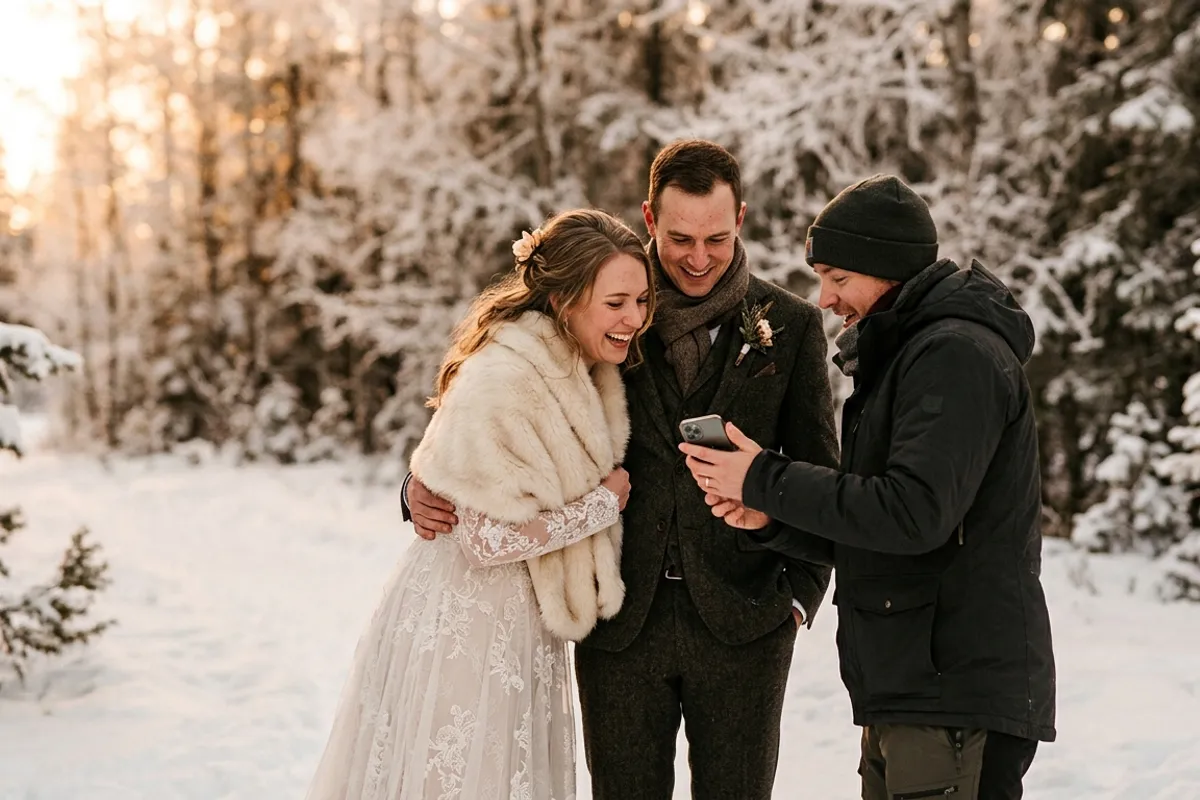
Winter is the slow season for most wedding photographers: fewer bookings, the same fixed costs. The math is blunt — when you cannot raise the number of weddings, you have to raise the revenue per wedding. An AR album is one of the cleanest ways to do that: the printed wedding book stays a wedding book, but every key spread also plays a video when the couple points a phone at it. Winter, conveniently, produces exactly the moments that beg to move: falling snow, garlands of lights, breath in cold air, sparklers at the night exit.
Quick answer
In winter, wedding photographers have fewer bookings, so the average check per wedding matters more. An AR album or living prints add a premium tier: printed photos that play video — vows, snowfall, the sparkler exit — when scanned with a phone browser, no app. You shoot short video clips alongside the stills and pair them in Stories AR; the production cost is minutes per spread, so most of the premium price is margin.
Key takeaways
- Winter's booking dip makes revenue per wedding the lever — a premium AR product raises the check without extra shooting days.
- Winter scenes are natural video moments: snowfall, lights, steam of breath, sparklers — stills that visibly lose something by being still.
- An AR album is a normal printed album where chosen spreads play video via the phone browser — guests and couples need no app.
- Workflow cost is low: 10–20 second clips shot next to the stills, then photo+video pairs uploaded to Stories AR in minutes.
- The QR and links are permanent — you can refresh or extend the album's videos later, e.g. adding the honeymoon clip.
The winter math: fewer weddings, heavier checks
Most couples marry between late spring and early autumn, so winter calendars thin out. Cutting prices to fill dates is the losing move — it erodes your positioning for the high season. The alternative is to make each winter wedding worth more by attaching a product the couple cannot get from a cheaper shooter.
A premium physical product does that better than extra hours of coverage, because it is visible, giftable and comparable. An AR photo book is exactly such a product: it looks like a top-tier printed album, and then it does something no ordinary album can — the pages play the day back.
Why winter weddings are made for living photos
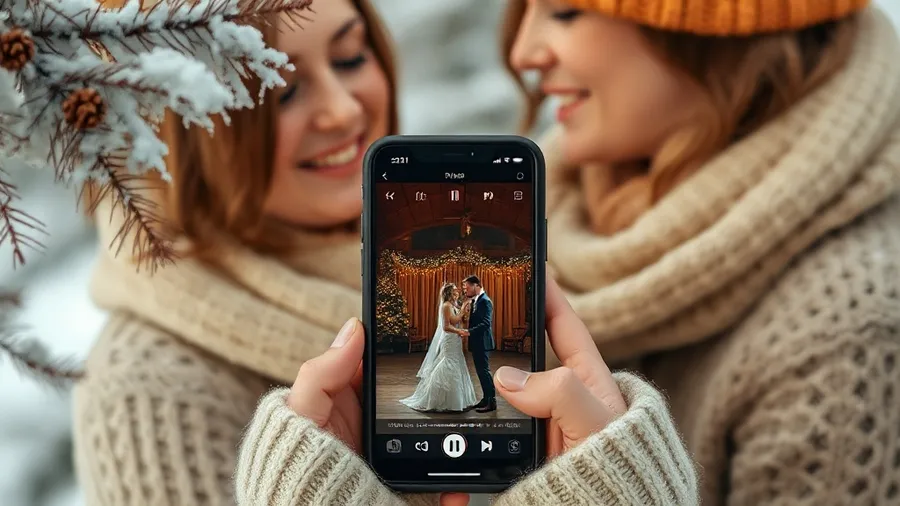
The strongest AR spreads come from scenes where motion is the point. Winter supplies them constantly: snow falling during the first look, the couple's breath in frosty air, garlands and candles flickering in a dark venue, the sparkler tunnel at the exit. A still of falling snow is a frozen texture; the same frame as a living photo shows the snow actually drifting down around the couple.
Sound is the second layer. The printed spread of the vows can play the vows — the couple's actual voices, years later, from a page in a book. For winter's early-dark receptions, video also rescues atmosphere that stills flatten: moving light is warm, frozen light is just bright spots.
What to shoot on the day (without changing your flow)
You do not need a videographer's setup. For each planned AR spread, roll 10–20 seconds of video from a locked or steady position right after you take the hero still — same framing, so the print matches the video's first frame.
A practical winter shot list:
- First look or portrait with falling snow — static couple, moving snow.
- Vows or rings close-up with live audio — the emotional core of the album.
- Venue in lights: garlands, candles, fireplace — motion of light in a dark room.
- Sparkler or confetti exit — the natural finale spread.
- A 15-second congratulations from parents or friends — a page that speaks.
Production: from card to album in an evening
The AR step happens after your normal cull and retouch. Sign in at pro.stories-ar.com, upload each photo+video pair, trim the clips in the built-in editor and pick the marker frame. Each pair returns a link and a QR code; put one small QR on the album's first page or a discreet code per spread — once scanned, the browser camera recognizes the printed photos themselves.
Trigger quality matters in album design: detailed photos track well, while flat-color spreads, heavy gloss lamination and repeating patterns do not — brief your album lab accordingly. Viewers need no app: Safari on iOS and Chrome on Android open the camera right in the browser, and the feed is processed locally, nothing recorded.
Time cost: an evening for a 10-spread AR layer. On the PRO plan at $24/month billed yearly you get 20 AR photos monthly — roughly two full AR albums, which matches a realistic winter booking pace.
Packaging it as your premium tier
Do not sell "AR" — sell the moment it preserves. In the sales meeting, hand the couple a sample print and let them scan it; the product explains itself in five seconds. Structure the offer as three tiers: digital gallery, printed album, and the living album with 8–12 AR spreads as the top package.
Two honest upsell paths follow. Living prints for parents — a framed portrait that plays the vows is a gift grandparents keep on the wall. And because links are permanent, you can offer a later video swap or addition (the honeymoon clip on the final spread) as a service touchpoint that keeps you in contact for anniversary and family shoots. More than 62 000 photographers already build products on Stories AR, with 259 000+ AR photos created.
Build your winter premium package
Upload one wedding photo and a 15-second clip — get a scannable living print to show at your next client meeting. First AR photos are free.
Start for freeFrequently asked questions
Do the couple and guests need an app to view the album?+
No. They scan a QR code once, the phone browser opens the camera, and each printed spread plays its video. Works in Safari on iOS and Chrome on Android.
Does shooting the video clips slow down the wedding day?+
Barely. Each clip is 10–20 seconds rolled right after the hero still from the same framing. A full album's worth is a few minutes of extra shooting spread across the day.
What if the album design uses matte textures or dark spreads?+
Detailed photos track well even on matte paper; what fails is flat solid color, repeating patterns and heavy gloss. Keep AR spreads photo-dominant and avoid mirror-gloss lamination.
Can videos be changed after the album is delivered?+
Yes. The links and QR codes are permanent — replace or update a video in the dashboard and the same printed spread plays the new one.